5 things you need to know about Programmatic Advertising
First Blog Post posted!
5 things you need to know about Programmatic Advertising – the reason you feel stalked across the internet (2020)
In this blog post, you will learn everything you need to know about Programmatic Advertising, what it is, how it works and who is using it (spoiler alert, everyone!). You will understand the technology behind online micro-targeting and finally comprehend why your google searches creepily follow you across the internet.
- What is Programmatic Advertising?
Programmatic Advertising is the automated buying of all types of ad spaces across all digital screens (display, video, mobile, social, audio and advanced TV). Programmatic, in short, is how digital media buying is done today that allows advertisers to be more accurate in the way they target, segment and reach their audience through an automated and streamlined process.
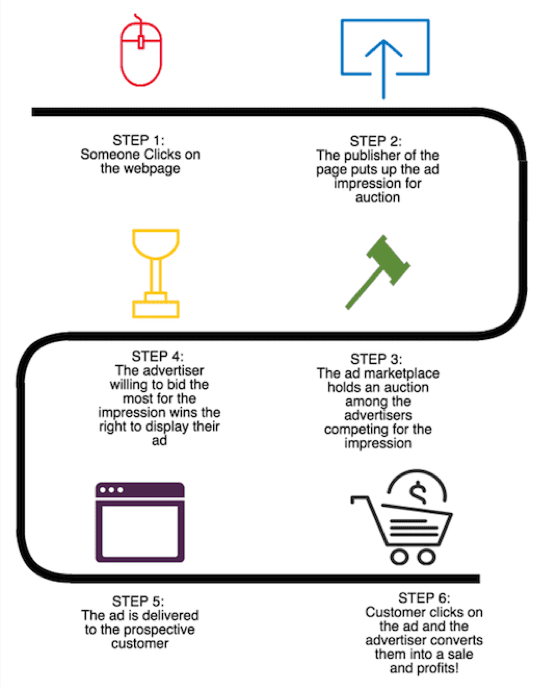
Where before an advertiser would negotiate ads directly (or through a vendor or agency) with a publisher, for example, a TV network, now they are negotiating and setting goals and conditions with an agency or vendor who allows advertisers to access ads across digital platforms and then buys them in real-time as they go live.
Programmatic is different to traditional purchased ads because of its speed and accuracy.
2. What is NOT Programmatic Advertising?
Google AdWords (now Google Ads) was the king of online advertising for some years and was built around the Google platform, search, keywords, and text ads. This is not programmatic. Programmatic is built around display ads, is vendor-neutral and works across 98% of the internet, including the Google platform.
Programmatic Ads actively use cookies to give it its narrow targeting capabilities a limitless scope, but they are not the same thing. Cookies are the small files that are stored on the user’s computer and hold data about their internet search, website history, profile, and behavior. At the heart of Programmatic Advertising Platforms, there is a machine learning algorithm that analyzes the campaign inputs and compares to user’s behavior and profile (with cookies) to offer the best-optimized audience that will convert.
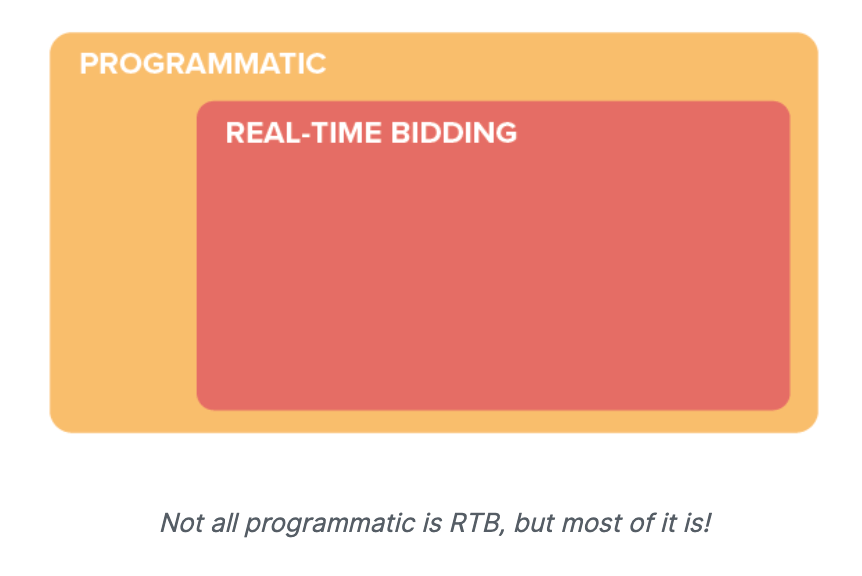
Programmatic is many times confused with RTB (Real-Time Bidding), however, RTB is a crucial component of how ad exchange occurs in the general programmatic ecosystem but not the only possibility. RTB creates the auction environment where different markets can bid to show different ads to users based on specific data about their profile, creating the possibility to show the right add, to the right person, at the right time. RTB is the quickest and cheapest way of buying ads but doesn’t allow advertisers to buy specific sections of a website (e.g. sports section of a newspaper’s website). To do this you will require another exchange form like PMP (Private Market Place) that allows more specific audience targeting and segmentation.
3. How does Programmatic Advertising work?

Ad Exchange – is where publishers meet advertisers and agree on a price to display their content. Basically, it’s like a stock market for digital ads. Most operate through RTB. The ad exchange sits in the middle and is used by DSP on the advertiser’s side and SSP on the publisher’s side.
SSP – Supply-Side Platforms manage the ads inventory of many publishers allowing them to better sell their display space. It connects to an ad exchange and lets it know what inventory is available, and in real-time is automatically auctioned.
DSP – Demand-Side Platforms in a similar way as SSP but from the advertiser side, is a software that allows advertisers to buy ad placements. It connects to an ad exchange and searches for a correct fit between the ad and target profile, and when it does send a signal to enter into a bidding auction to win the placement.
DMP – Data Management Platforms are the brains behind the DSP and are used to collect, store and sort the information relevant for advertisers to optimize their targeting efforts. This is where Artificial Intelligence and Machine Learning advances are becoming more relevant. DMPs are responsible for sorting and segmenting the information incoming from cookies and other data sources, as well as generating real-time reporting and analysis on the results of the campaign.
4. Who is using Programmatic Advertising?

Since 2017 digital media ad spending in the US became bigger than traditional ad spending and is growing at rates that will make digital double the size of traditional marketing by 2023. Most of the spending (83.6%) of digital ads are done through Programmatic systems and because of its benefits will only continue to grow.
5. Is Programmatic Advertising Effective?
Studies show that programmatic can bring optimization to a campaign that will lift brand metrics by 150% vs non-programmatic campaigns. So, the short answer is yes, it’s very effective!
However, programmatic has to evolve in two aspects to better service Advertisers and Audiences and be more effective in the future.
First, it needs to redefine creative advertising and progress to new personalized, value-added, moment specific ads that have the user’s needs at the center. Programmatic allows marketers to effectively reach their target audience at scale, but creative teams need to work in harmony with programmatic to maximize advertising effectiveness.
“Successful brands are those who understand the balance of story-telling & programmatic.“
James Harris, Global Chief Digital Officer at Carat
Second, it needs to cut intermediaries and allow advertisers to manage their own campaigns and make more out of their marketing budgets. Programmatic is usually traded on a CPM (cost per thousand or mille) basis, meaning the cost of generating 1,000 digital impressions of the ad, and range widely depending on quality and level of targeting. However, every intermediary charges a percentage fee for the transaction from SSP, Ad Exchanges, DSP and agencies used to manage this process. The future of programmatic will be self-served for advertisers finding a way to buy in-house and eliminate media agencies and middlemen.
Conclusion
The future seems promising for programmatic advertising and right now is a great time to learn about it and get in on this rising trend.
The availability of advanced marketing tools has never been better for all sizes of brands and companies, and hopefully, this blog has given you a better understanding of what programmatic is all about.
If you learned something about programmatic let me know and leave a comment below!
Don’t forget to subscribe to this blog to get more news on interesting Digital Marketing trends for the coming years!
Follow My Blog
Get new content delivered directly to your inbox.
by santiagomutisJanuary 30, 2020
About me

Business Consultant | Digital Strategy |Technology Management degree at Georgetown University
Currently deepening my technical skills and experience through a master’s degree in Technology Management at Georgetown University, bringing together digital knowledge that mixed with a business outlook will enable me to transform organizations in a continuously evolving landscape.
 Santiago's TechBlog